THE KNEE
Like regenerative braking
A 2008 knee harvester in Science switched on only as muscles slowed the leg at the end of each swing. Test walkers with one on each leg made an average of 5 watts.
See the numbers motionweartech
WHAT THE STUDIES MEASURED
Walking wastes energy. Some wearables try to catch it.

CATCH THE BRAKE not the push
≈ 5 W Average output, one device on each leg
Researchers have built knee braces, backpacks, shoe inserts and socks that turn body movement into electricity. The published numbers range from a few milliwatts to several watts, depending on where on the body the device sits.
THE SHORT ANSWER
Large, slow movements give the most power.
Small fabric devices give far less.
THE KNEE
A 2008 knee harvester in Science switched on only as muscles slowed the leg at the end of each swing. Test walkers with one on each leg made an average of 5 watts.
See the numbersTHE BACKPACK
A suspended-load backpack carrying 20 to 38 kg turned the load's up-and-down movement into up to 7.4 watts, with little extra metabolic effort compared with a rigid pack.
Compare devicesSHOES AND SOCKS
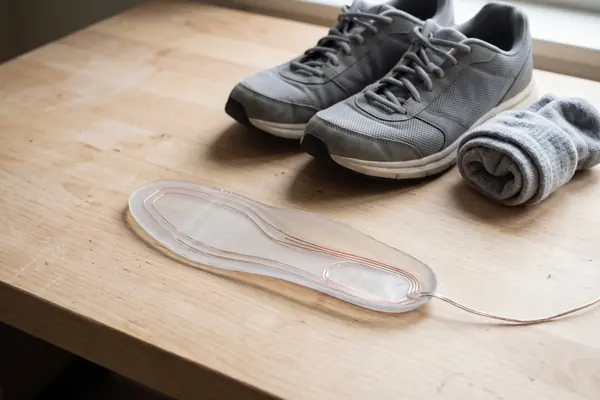
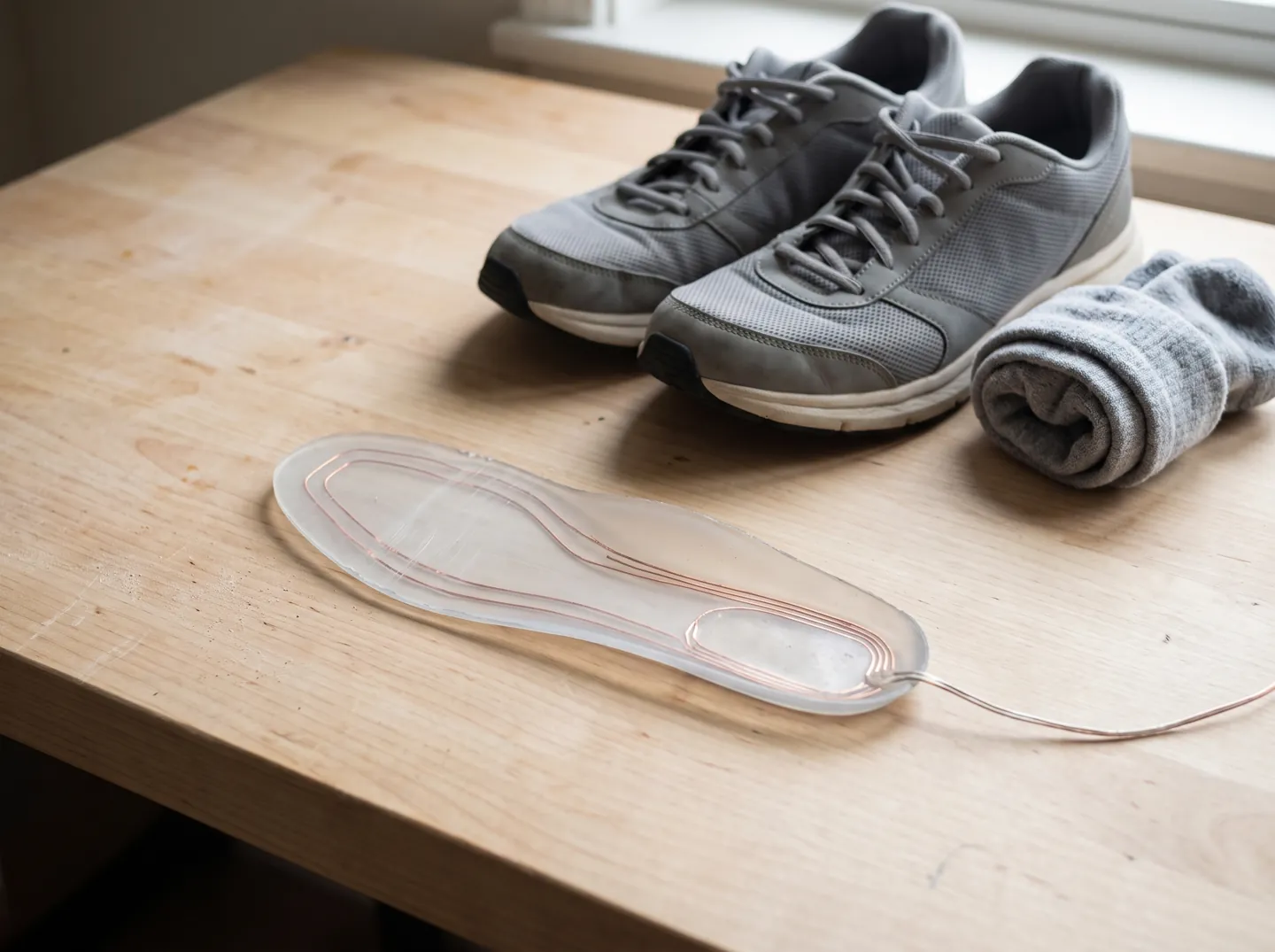
Shoe devices made around 20 milliwatts. Newer fabric generators in socks and sleeves charge small capacitors for sensors, watches and LEDs.
How they workWHERE ON THE BODY?
Choose a wearable harvester from the published studies to see how much electricity it produced. The bar shows output relative to the others.
Figures are from laboratory tests with small groups of people and prototype devices, not products you can buy.
THREE WAYS TO HARVEST
Each approach turns a different kind of movement into current, and each has its trade-off.
A small generator, gears and a clutch engage only when muscles act as brakes, as the knee slows at the end of a swing, so the walker barely notices.
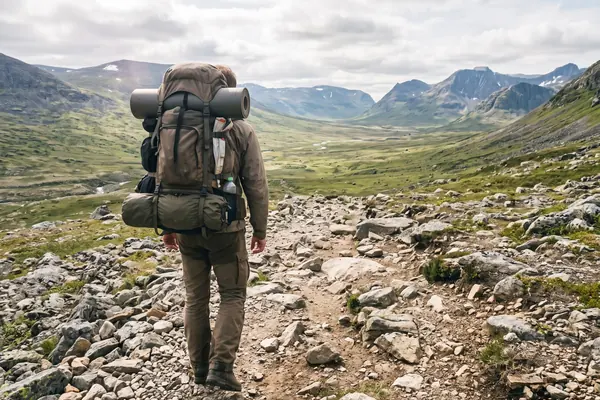
In the backpack, the load rides up and down as you walk and that movement spins a generator. It only pays off with a heavy load.
Pressing, bending or rubbing special materials separates electric charge. These devices are light and flexible but give small amounts of power.
Fabric generators produce irregular pulses, so a rectifier and a capacitor or battery smooth and store the energy before it powers anything.
TWO NUMBERS WORTH KNOWING
One figure from a working prototype,
one from a 1996 back-of-the-envelope estimate.
≈ 5 W
Average output, one device on each leg
The extra metabolic power needed to make each watt was less than one eighth of that for conventional human power generation, because the device helps muscles brake rather than push.
KNEE HARVESTER · SCIENCE 2008
up to 100 W
Estimated power from walking, arms, fingers and breathing
A 2024 review cites Starner's calculation that a 68 kg adult man could generate up to 100 watts. It adds that designing devices that are flexible, wearable and move with the body remains the main practical problem.
WHOLE BODY · STARNER 1996
A 2022 knee harvester study reported about 5 W again, and found the best setting reduced metabolic effort by 8 W compared with wearing the device as dead weight.
WHO IT IS FOR
The 2005 backpack team pictured field scientists, explorers and disaster-relief workers freed from carrying heavy spare batteries.
The 2008 knee team said producing substantial electricity with little extra effort suits charging powered prosthetic limbs and other portable medical devices. Fabric harvesters are being tested for self-powered sensors.

Questions
In tests, a knee device on each leg made an average of 5 watts. The university that developed it said one minute of fast walking could give 30 minutes of talk time. These were prototypes, not products in shops.
A little. The 2008 knee harvester only engages when muscles are already braking the leg, so the extra metabolic cost per watt was less than one eighth of a conventional human-powered generator.
Heel strikes give only small amounts of energy. The 2005 backpack study put shoe devices at about 20 milliwatts, compared with several watts from a knee brace or loaded backpack.
Piezoelectric materials make charge when pressed or bent. Triboelectric generators make charge when two materials touch and separate. Both can be woven into fabrics but give low power.
A 2024 review cites a 1996 estimate that a 68 kg adult man could generate up to 100 watts through walking, moving the arms and fingers, and breathing. Capturing it comfortably is the hard part.
Updated
ABOUT THIS NAME
motionweartech.com is part of the DoodleSale portfolio. It isn't in an auction right now, but you can ask about leasing it.